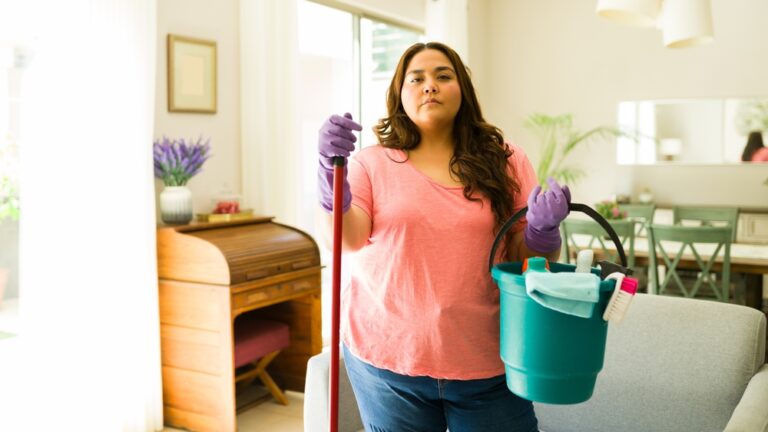
If you work as a housekeeper in someone’s home — whether as a live-in or daily worker — it’s important to know that you have rights under Federal and New York State law that apply whether you are documented or not — and these rights cover pay, rest, and protection from harassment.
Who Qualifies as a “Live-In Housekeeper”?
In New York, you are a “live-in domestic worker” or a “live in housekeeper” if you live in your employer’s home and perform household work — including cleaning, cooking, childcare, elder care, etc.
What are you entitled to as a Domestic Worker?
Whether you work full time, part time, live-in or live-out — all hours you work must be paid at least the applicable minimum wage in New York State.
If you do not live in your employer’s home — and you work over 40 hours per week — you are entitled to overtime pay of 1.5× your regular hourly rate. If you live in your employer’s home (live-in housekeeper)— you are entitled to overtime pay after 44 hours per week.
Additionally, in New York:
- You must have one full 24-hour day of rest every seven days.
- If you agree to work on your rest day, the hours must be paid at the overtime (1.5×) rate.
- After working for the same employer for one year, you must receive at least three paid days off per year.
- You must receive a written notice that includes your rate of pay, overtime rate, pay schedule, employer’s name & address, and information about any allowances (e.g., lodging, meals) if applicable.
- Your employer must provide accurate pay stubs each pay period showing hours worked, rates (regular and overtime), deductions (if any), and total pay.
- In New York, domestic workers are covered under the New York State Human Rights Law — which means you can’t be discriminated against or harassed because of race, national origin, religion, gender, or other protected characteristics.
- If you speak up about unpaid wages, overtime, or file a complaint about harassment — your employer cannot retaliate against you. Retaliation is illegal under the same protections.
If you work in someone’s home as a housekeeper, nanny, elder care worker, or in any domestic role — you have rights. These rights apply no matter how you are paid, for how many years you have worked, or whether you live in the employer’s home — and they apply to all workers, regardless of immigration status. The attorneys at Pechman Law Group have extensive experience representing domestic workers. Notable cases include a $100,000 settlement for a housekeeper in Rockland County.
If you believe you are victim of wage theft, please contact the attorneys at Pechman Law Group at 212-583-9500. Knowing your rights is the first step to making sure you are treated with fairness, dignity, and respect.